RAID LEVEL 0_1: High Data Transfer Performance

RAID Level 0+1 requires a minimum of 4 drives to implement
Recommended Products
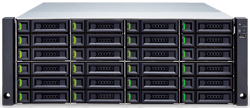
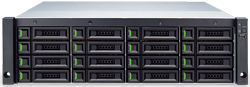
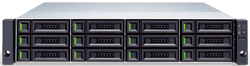
Featured Product
Characteristics & Advantages
- RAID 0+1 is implemented as a mirrored array whose segments are RAID 0 arrays
- RAID 0+1 has the same fault tolerance as RAID level 5
- RAID 0+1 has the same overhead for fault-tolerance as mirroring alone
- High I/O rates are achieved thanks to multiple stripe segments
- Excellent solution for sites that need high performance but are not concerned with achieving maximum reliability
Disadvantages
- RAID 0+1 is NOT to be confused with RAID 10. A single drive failure will cause the whole array to become, in essence, a RAID Level 0 array
- Very expensive / High overhead
- All drives must move in parallel to proper track lowering sustained performance
- Very limited scalability at a very high inherent cost
Recommended Applications
- Imaging applications
- General fileserver


Comments
Post a Comment